Venini in Murano
By Tiziana Aiello
June 17, 2025
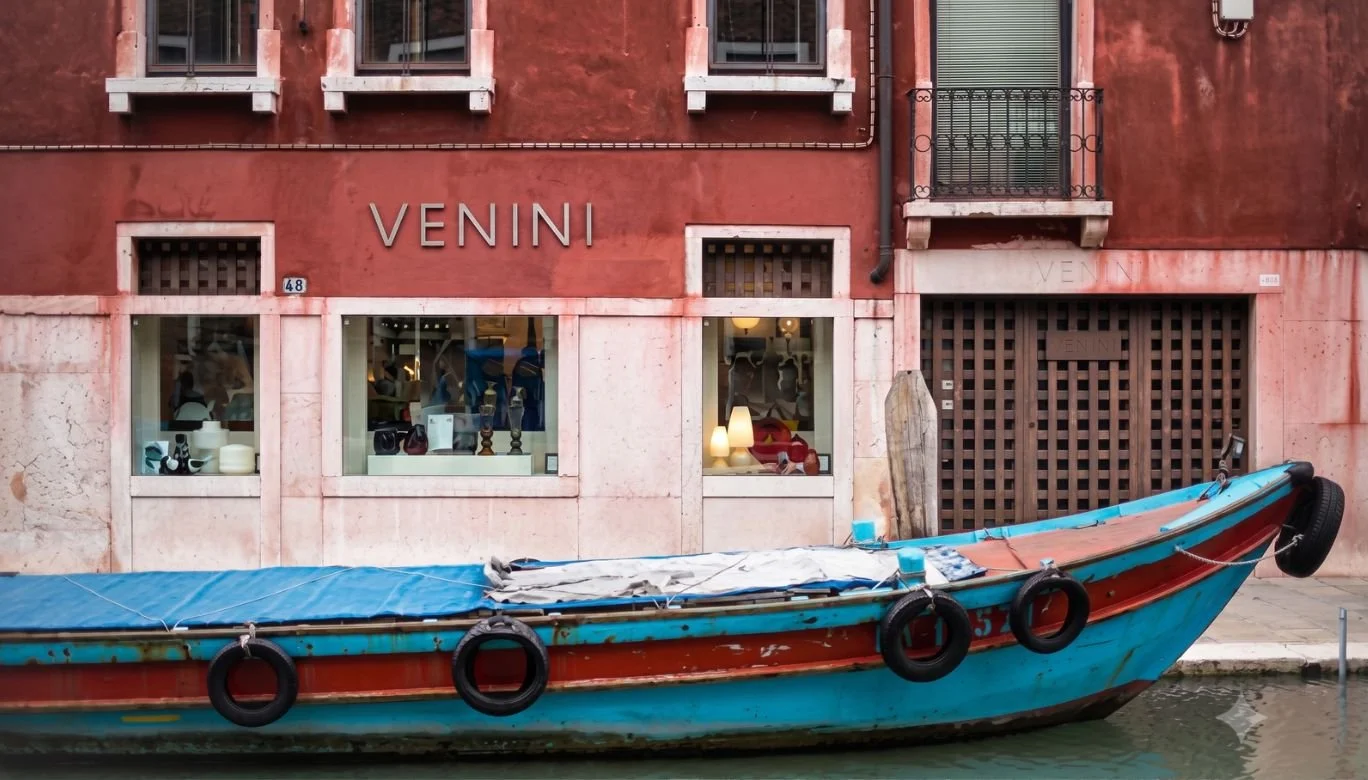
Opening its door in 1921 Venini in the heart of Murano, Venice, Italy has preserved and interpreted a unique artistic heritage that has its origins in the 13th-century Venetian culture, creating distinctive works that combine the profound knowledge of tradition with the allure of contemporary tastes.
At Venini, molten glass is first gathered on the blowpipe, then marvered on steel to shape and cool before the maestro begins to blow life into it.
With deft tool work and cycles of reheating, the form takes shape, finally resting in the annealer to cool slowly and preserve its strength.
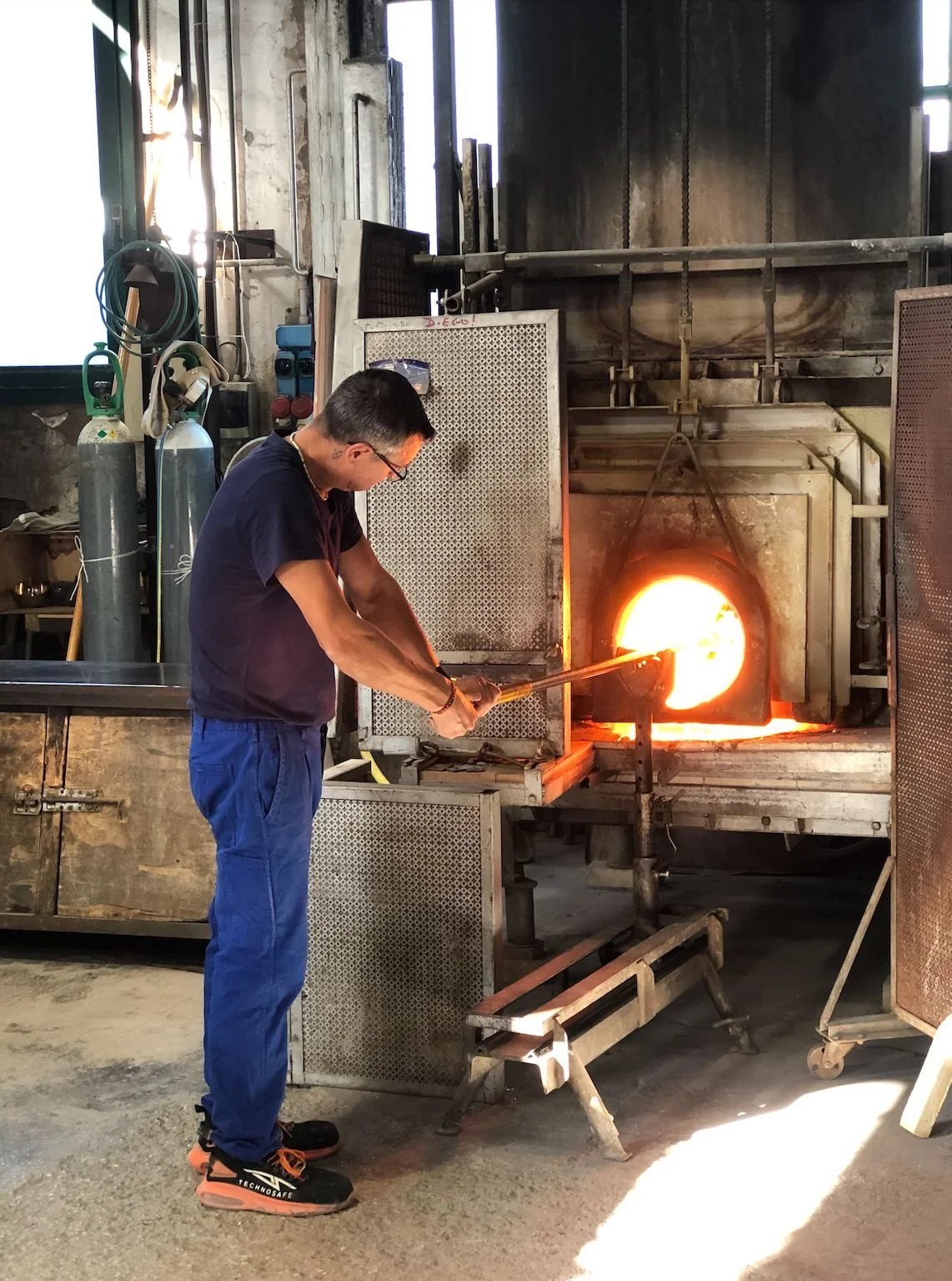
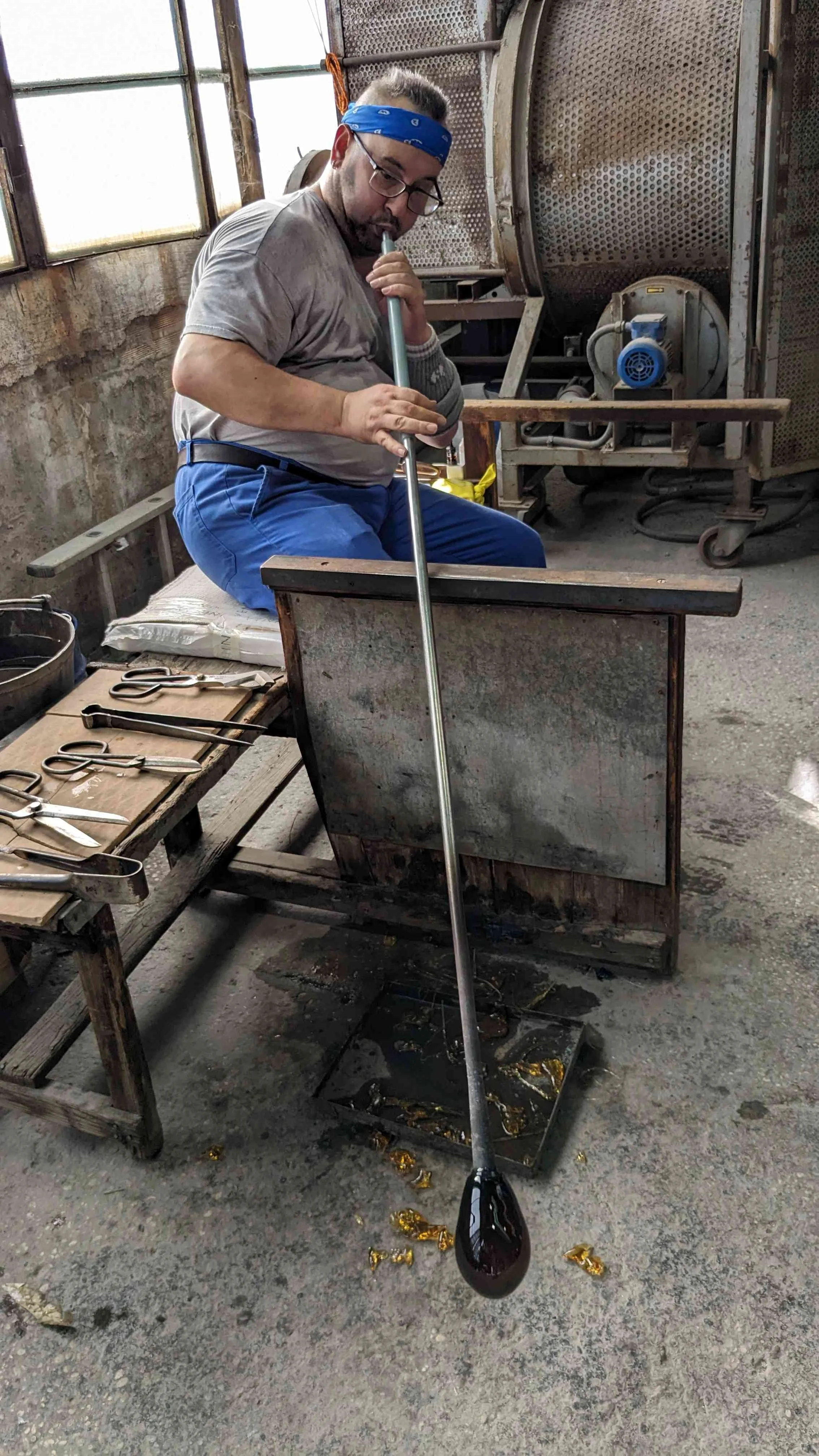
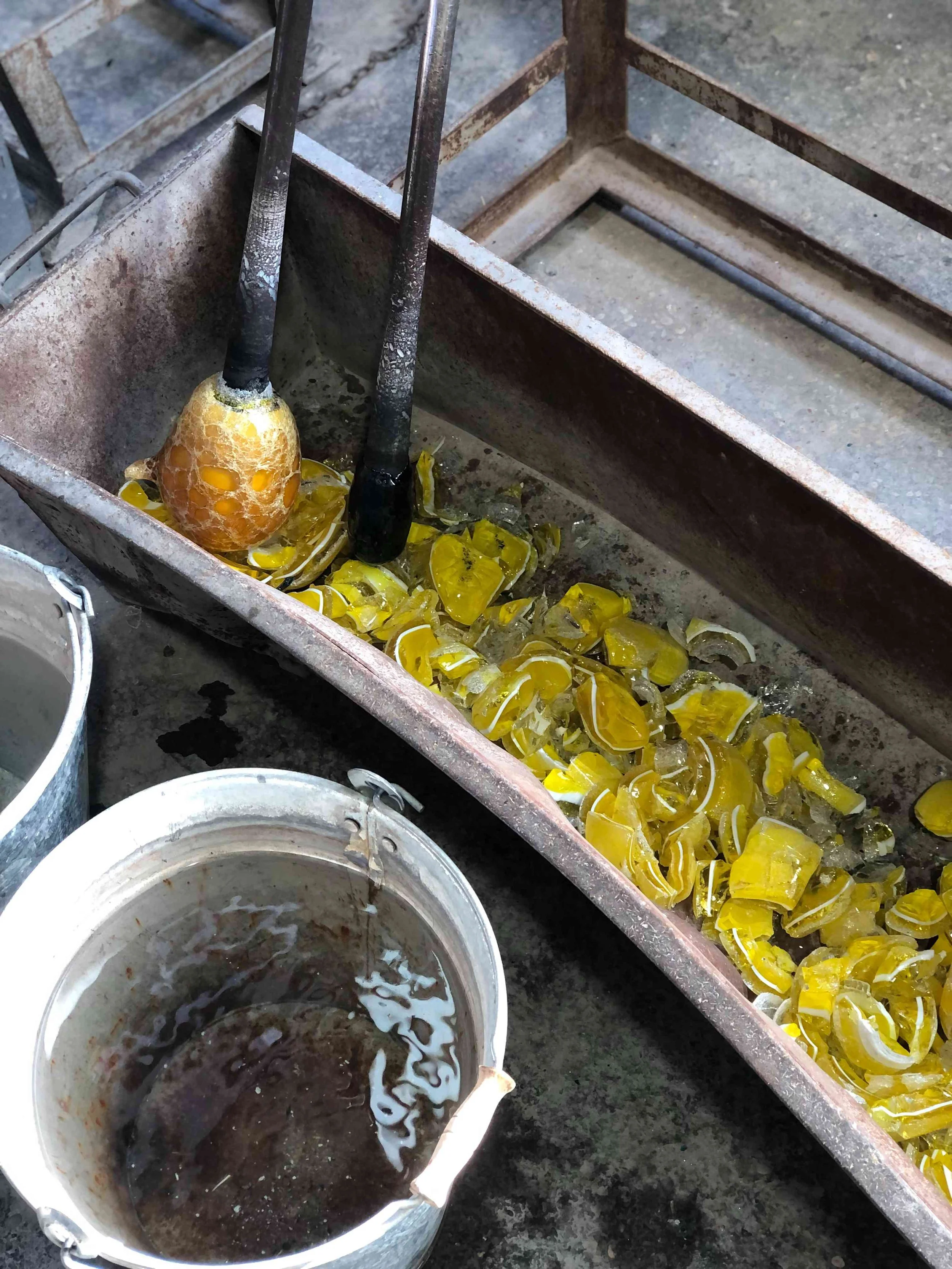
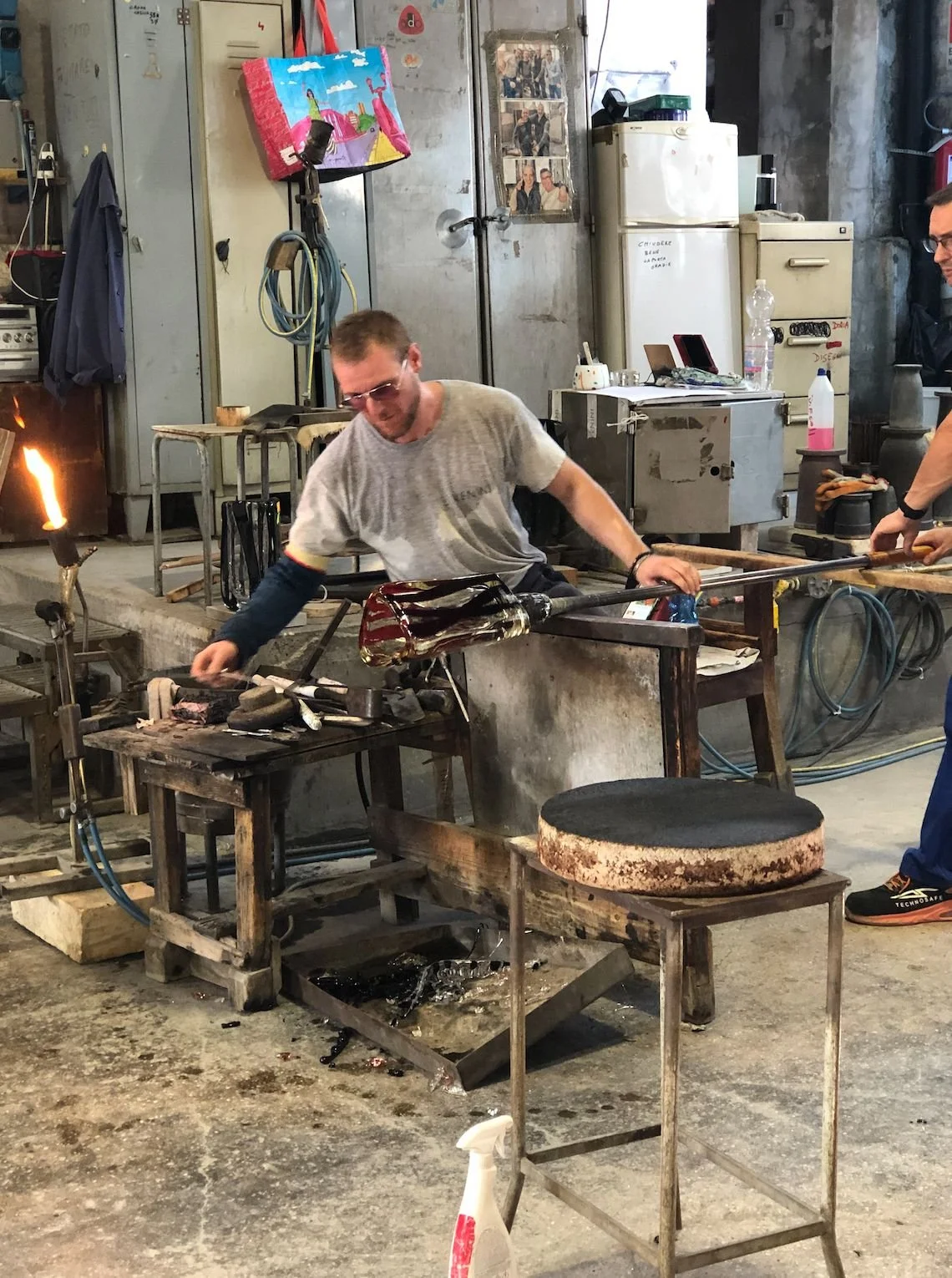
The maestros often work in complete silence, communicating only through subtle gestures and rhythm.
Every movement is synchronized with the furnace heat, so a single nod or the sound of a tool tapping the bench replaces words, a kind of choreography passed down through generations.
I had the pleasure of visiting Venini last November to witness the magic that happens in the furnaces, with ancient skills and expertise that have been perfected over decades.
Inside, time feels suspended between flame and breath.
The heat is immediate, but so is the hush the rhythm of artisans who have spent decades shaping molten glass into forms that defy gravity and expectation.
The Black Belt Vase
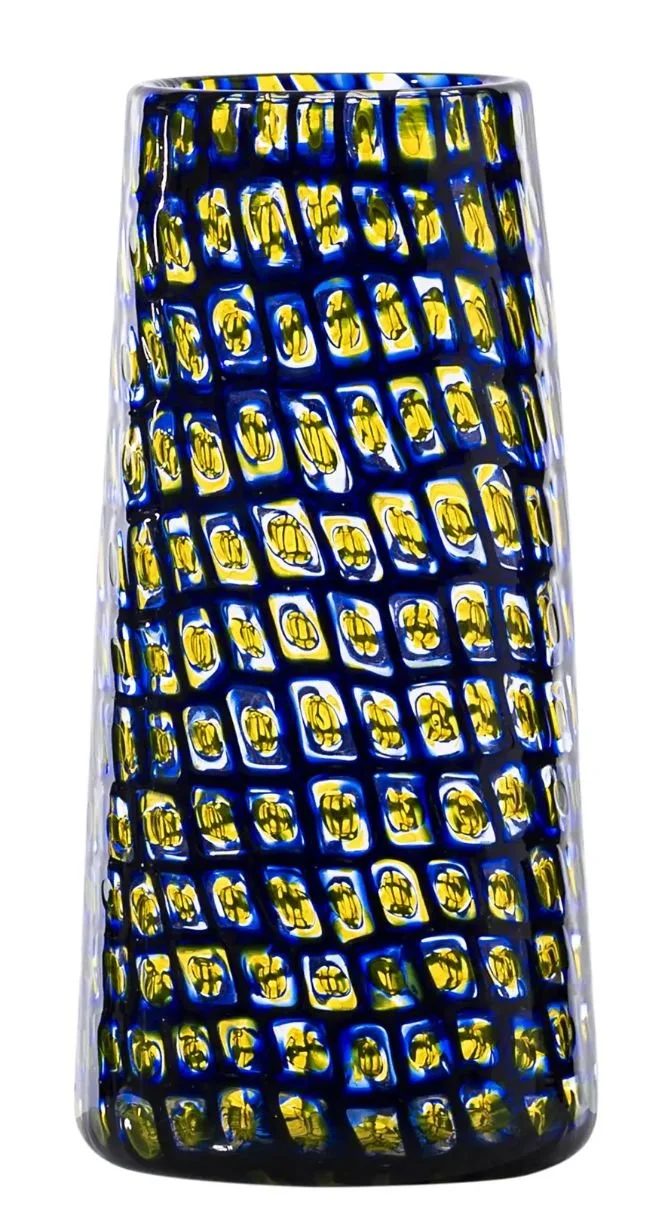
During our visit , we had the unique opportunity to watch the artisans create the Black Belt vase designed by Peter Marino…
It was fascinating to see how the vase sketches were laid out on the board for the glassmakers to follow the designer’s vision, and how they carefully prepared the color pigments to achieve the exact hues he envisioned At Venini, he translated that vision into glass, merging tradition with contemporary expression.
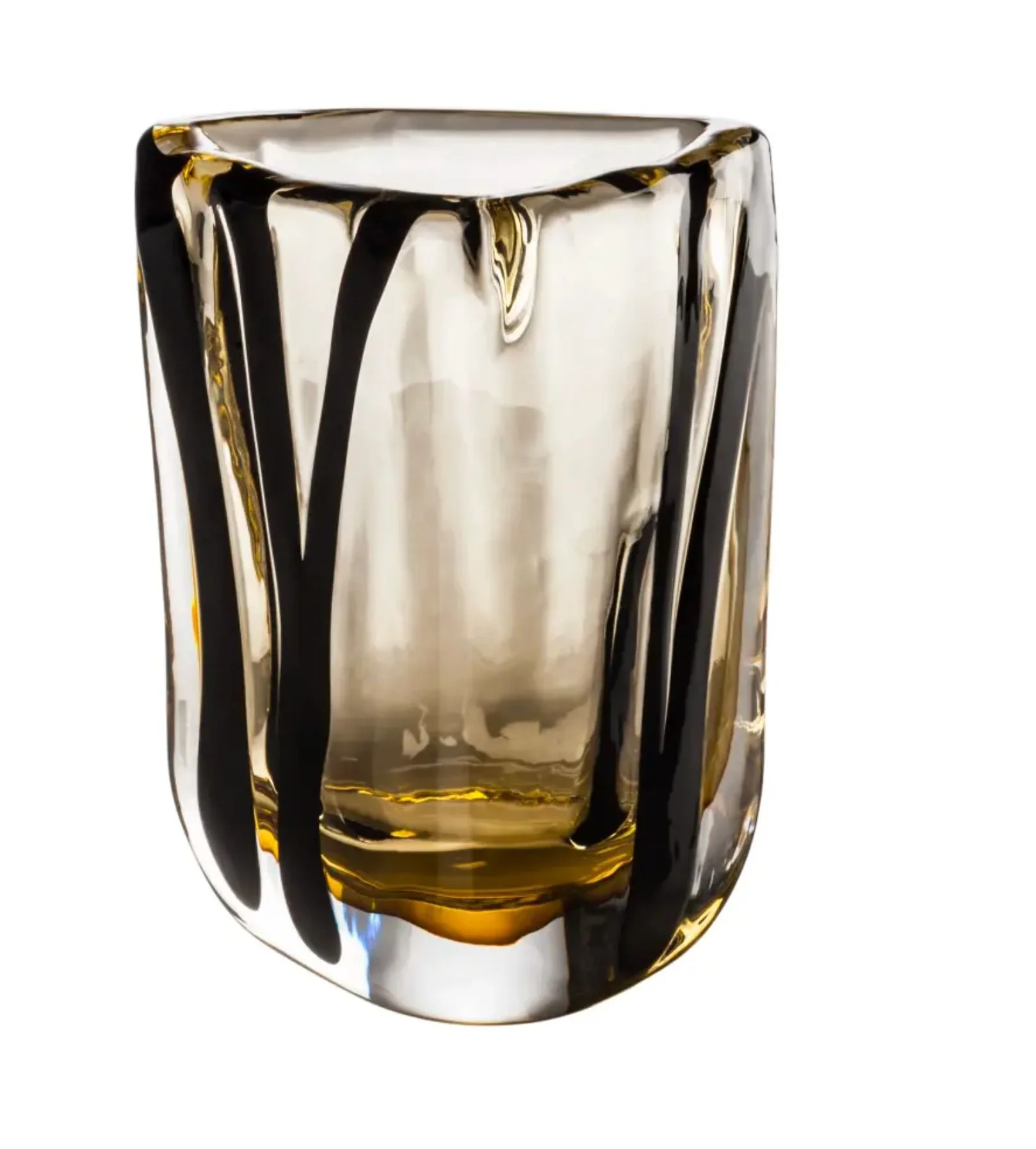
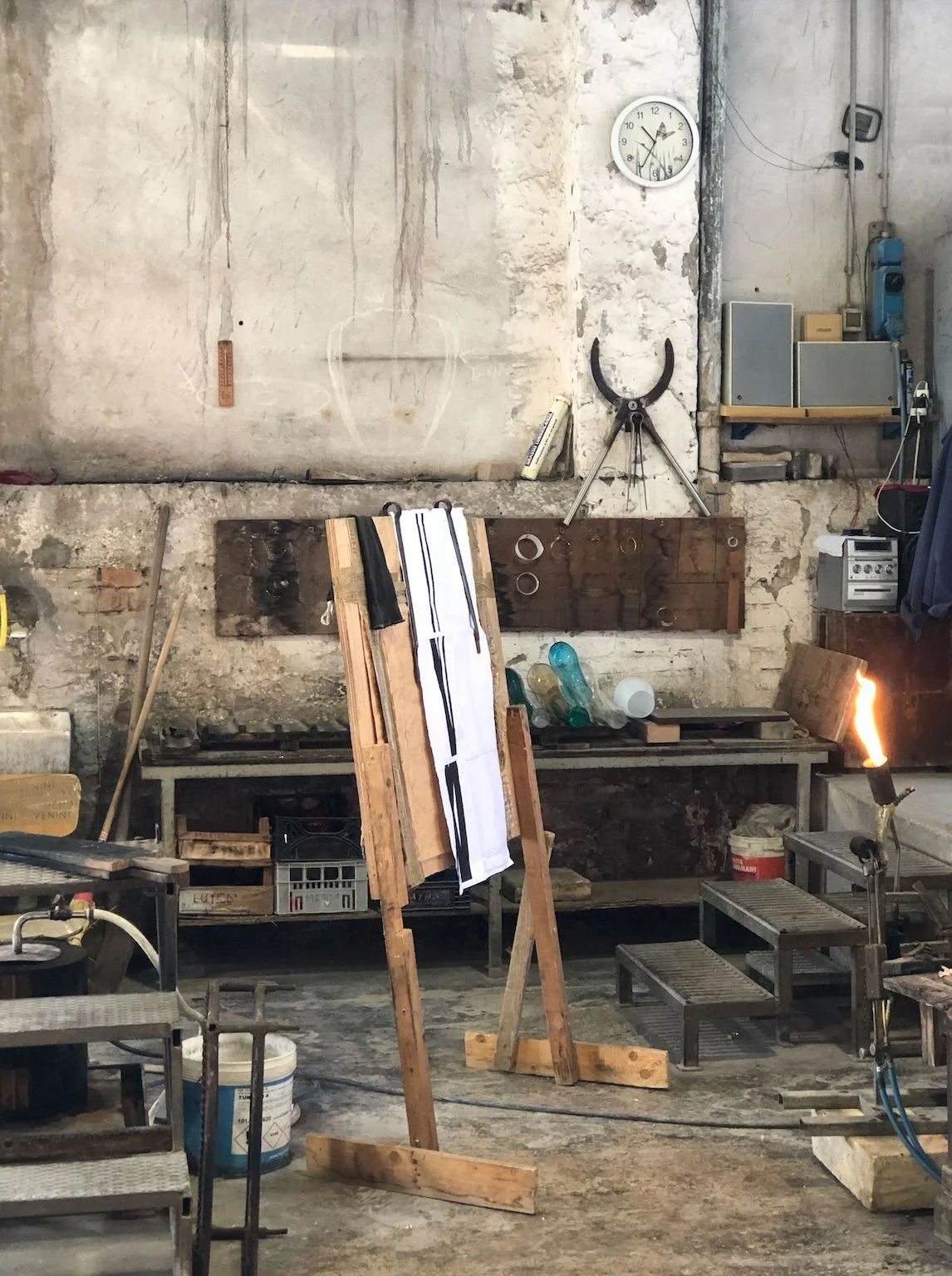
Peter Marino’s design, its geometry, and dialogue between past and present reflects his bold architectural language; the black belt concept was born from Marino’s desire to create functional art pieces that seamlessly integrate into everyday life vases that are not merely decorative but were designed to be filled with flowers emphasizing utility in daily settings.
The name ‘Black Belt’ was inspired by his personal style that resembles black belts that are criscrossing, which he adorns as his signature style.
Gio Ponti and Carlo Scarpa
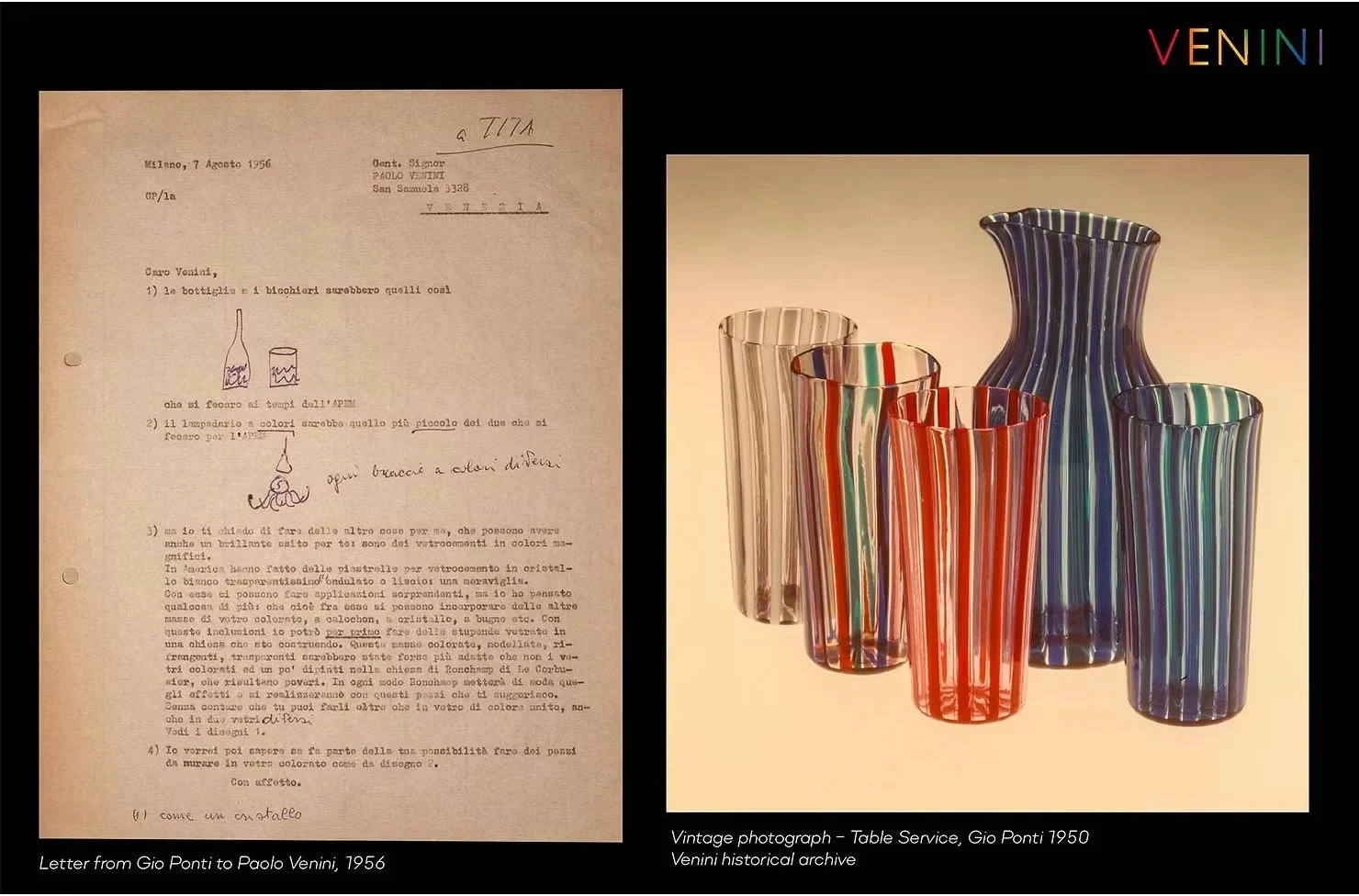
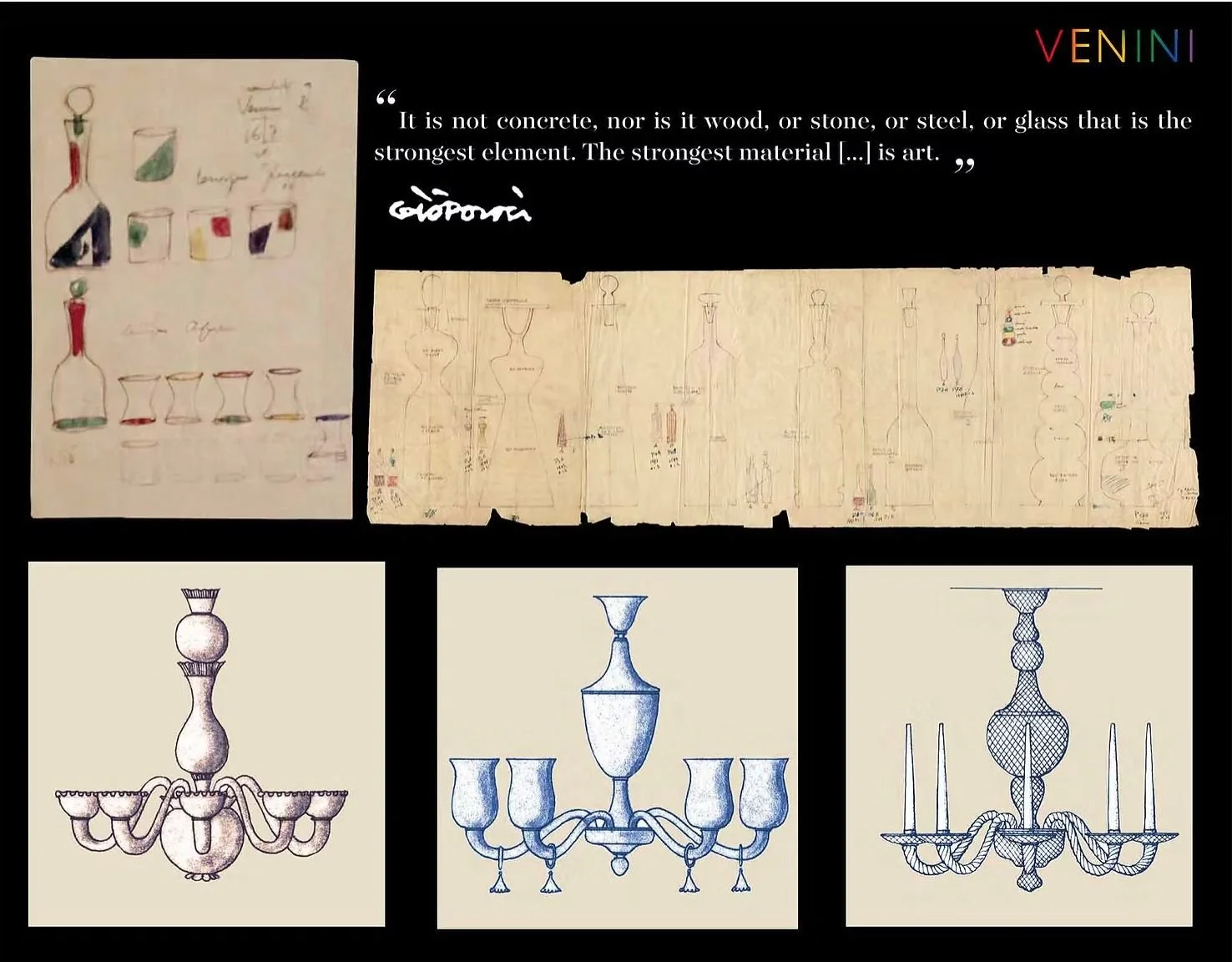
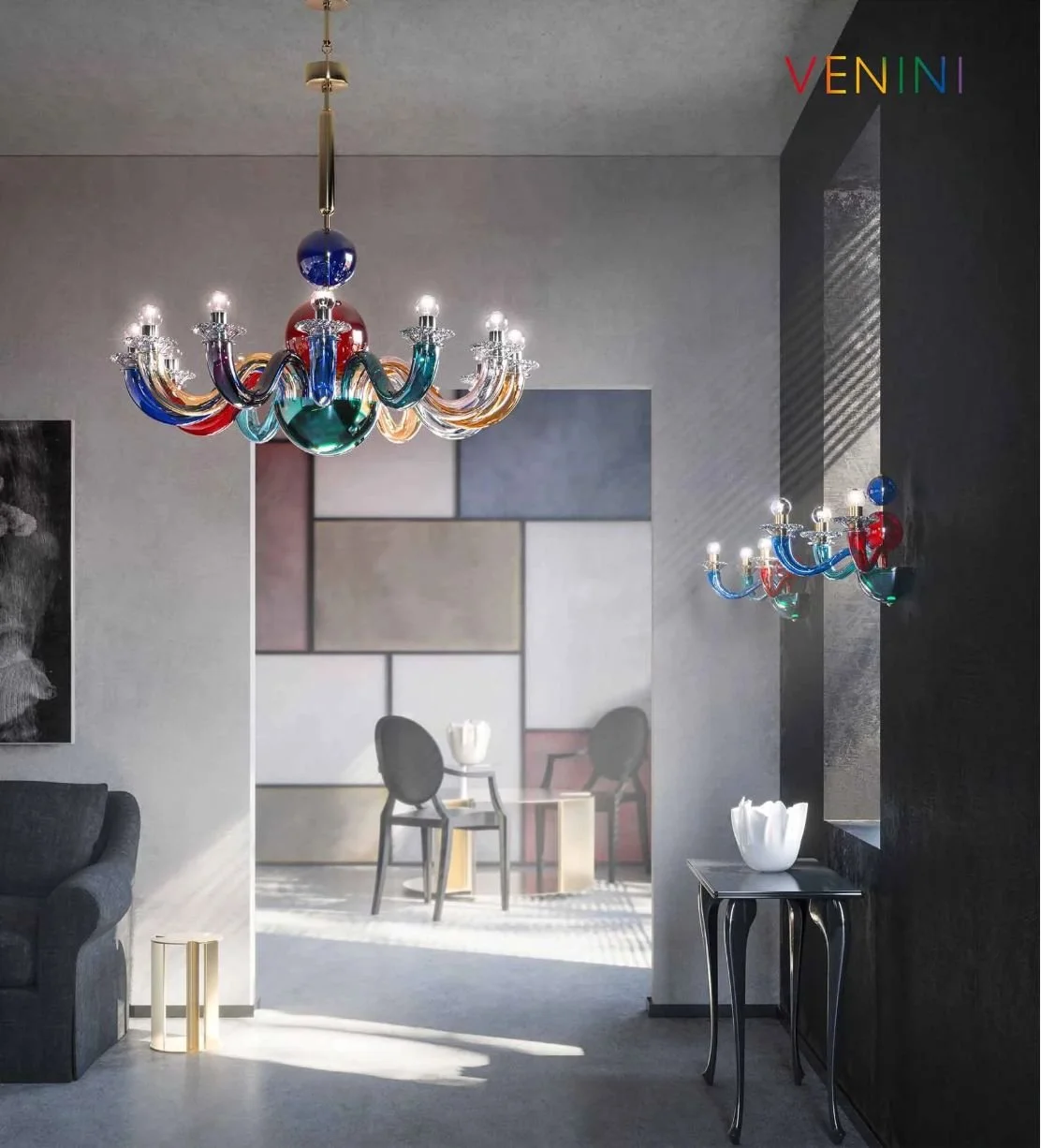
Venini has collaborated with Gio Ponti and Carlo Scarpa to create some of the best pieces of art to ever exist in the history of Italian craft,I was also privileged to go around their showroom to witness some of their work, one of Gio Ponti's design that I admire is the 80 series chandelier created in 1946: the combination of clean lines and bright colours still make it a classic appreciated by connoisseurs all over the world Its absolute originality derives from the alternation of curved arms, each in glass of a different colour.
“Everything in the world must be full of colour.”
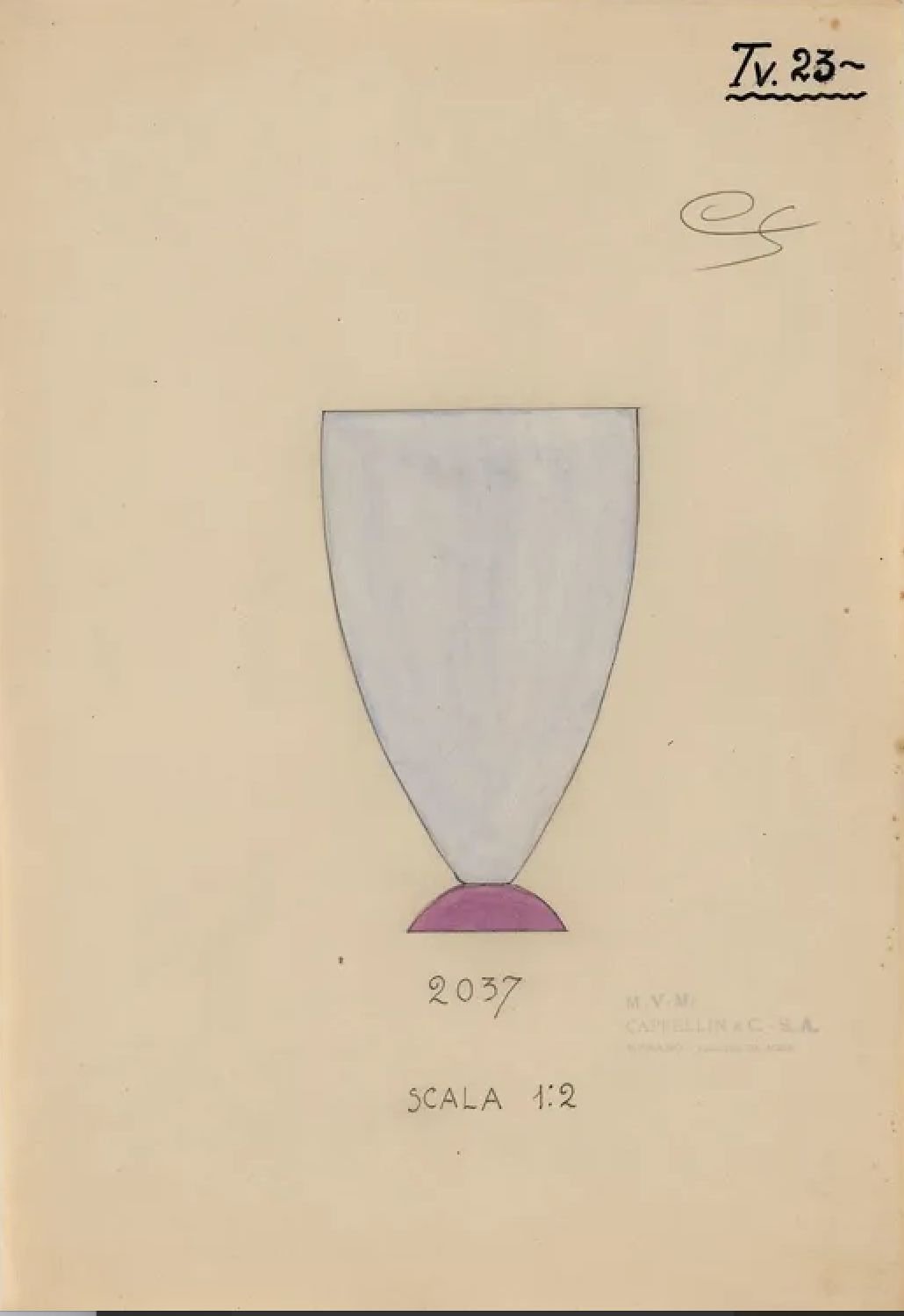
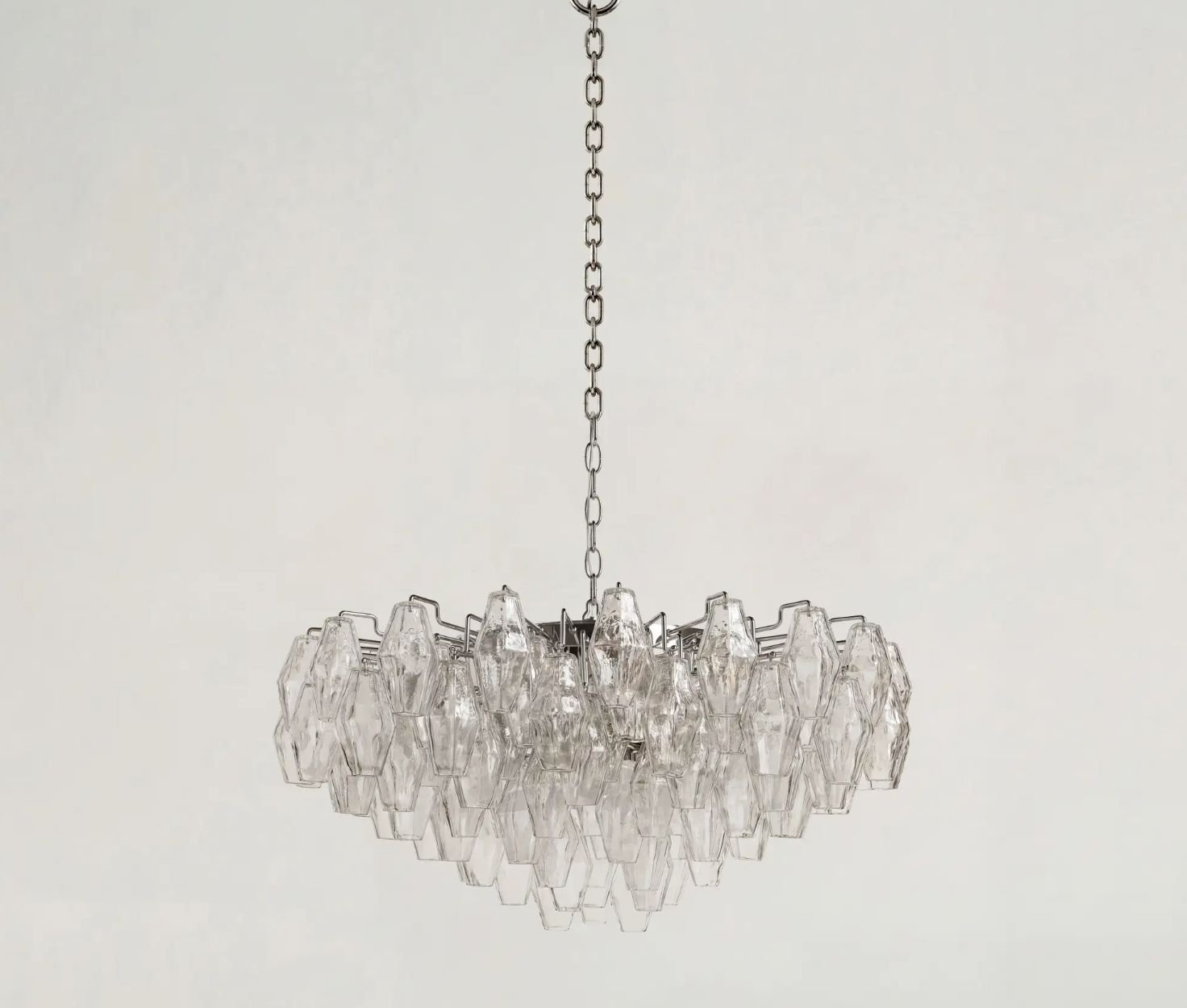
Carlo Scarpa on the other hand has collaborated with Venini to make very artistic pieces, at the showroom one of his hexagonal chandelier sit pretty and magnificently symbolizing Sparta vision for a design which is more than Utilitarian; it becomes part of of the interior decor offering a sculpture element as well as providing illumination.
The pink-tinted hexagonal chandelier which features Murano glass as its main material is consistent with Scarpa’s ability to blend organic forms with geometric patterns.
Leaving the furnace, I carried with me not just images of chandeliers glittering like constellations, but a renewed sense of respect for craftsmanship.
Venini proves that glass is more than material it’s memory, invention, and art in motion.